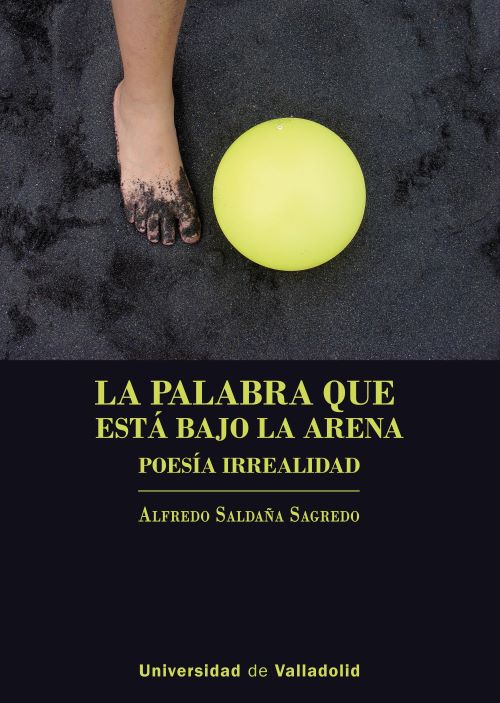
The word that lies beneath the sand. Unreal poetry
Keywords:
contemporary poetry, Philosophy of culture, Literary criticismSynopsis
Throughout its history, poetry has maintained a complex relationship with what we generically call reality, such that, by naming it, it also manages to paralyze and dissolve it into a magma that, upon cooling, forms the hardened crust that stifles life's tremors. With the fabulous contribution of thought, poetry advances like someone who has made the path their home, not merely the instrument or means of approaching it, like someone who imagines that this journey is their sole possession and identity. Thus, we must continue walking with no other aim than to find the trace of the word beneath the sand, that sign protected by the ice floe that covers the secrecy preceding its eventual and luminous germination.
When poetry converges in that extraordinary event where the word allies itself with thought, it ventures down a path of strangeness in search of an untamed metaphor that both conceals and reveals the very essence of another reality. But it often translates into an inquiry that consists of remaining expectant and attentive, like someone who has neutralized their will and retains no other perspective than that of freeing themselves from their own constraints. In any case, it is necessary to interrogate poetry by questioning it, even while being aware of the uncertainties that such questioning may generate.
Throughout this essay, it is argued that the poetic experience represents the realization of an idea of dissolution; it is founded—to use a term recurrent in certain postmodern jargon—as a simulacrum of death. We write, in part, to bear witness to a loss, and the awareness of that loss is an essential feature of our feigned identity. In light of Rimbaudi's well-known assertion that recounts the journey from self to otherness, toward a kind of otherness in which sameness seeks to combine with difference, the word that lies beneath the sand seeks to explore the undeci(di)ble and appears by lingering, taking the form of desire or fear of a sudden and unforeseen appearance. It is a word that merely waits, listens, the trace of a submerged memory that bears witness to an original language, the unspoken adventure of that which, without yet manifesting itself, already is. For if nothing is what it seems, then everything already acquires meaning, everything already is what it is, displaced, deferred, within reach of that unpronounceable word capable of piercing the well with its breath.